Richard Sanders, Taipei
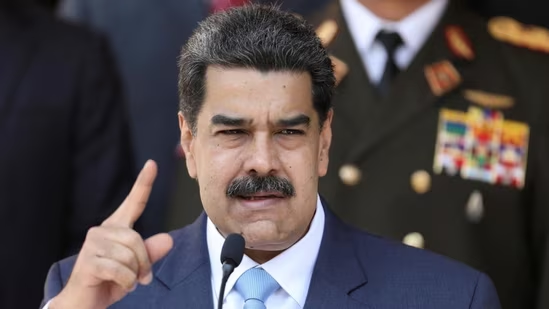
On January 3, 2026, U.S. forces captured Venezuelan President Nicolás Maduro and extradited him to New York to face charges of narco-terrorism and drug trafficking. The move, unprecedented in modern times, immediately drew comparisons to the 1989 capture of Panamanian strongman Manuel Noriega, who was tried in Florida for drug trafficking. President Donald Trump’s legal team, including the Attorney General and the DEA, explicitly invoked the Noriega case as a legal and strategic precedent to justify Maduro’s arrest and trial in U.S. courts.
The Noriega case remains one of the most controversial episodes in U.S. foreign policy. In December 1989, the United States launched Operation Just Cause, invading Panama to depose Noriega and bring him to Miami. He faced charges of drug trafficking, racketeering, and money laundering. Despite objections from international legal scholars, U.S. courts relied on the Ker-Frisbie principle, which allows prosecution even if a defendant is forcibly abducted abroad. Noriega was convicted in 1992 and sentenced to 40 years, serving 17 before being extradited to France and later Panama. Trump’s legal team now argues that this precedent provides the necessary legal foundation for trying Maduro in U.S. courts.
In framing Maduro’s capture, Trump has repeatedly referred to him as a “narco-dictator,” echoing the “narco-state” label applied to Noriega decades earlier. The administration insists that military strikes on Caracas were necessary to secure Maduro, just as Panama was invaded to secure Noriega. Domestically, the move is being presented as a strong stance against transnational crime and corruption, appealing to voters who favor aggressive foreign policy.
Maduro’s trial is expected to take place in federal courts in New York under narco-terrorism statutes, expanding beyond drug trafficking to include terrorism, corruption, and human rights abuses. His defense team is likely to argue that the arrest violated international law and Venezuelan sovereignty, while prosecutors will rely on the Ker-Frisbie precedent to assert jurisdiction regardless of the capture method. International fallout is already mounting, with Russia, China, and Iran condemning the arrest. Mexico has also issued a strong condemnation, warning that the extrajudicial abduction of a sitting president sets a dangerous precedent. Analysts in Mexico City fear that the country’s own leadership could be next on Washington’s agenda, particularly given ongoing tensions over drug cartels and cross-border crime.
In Venezuela, Maduro’s removal has created a power vacuum that opposition figures, backed by the United States, are expected to fill. Analysts suggest that Washington will encourage the cancellation of Chinese Belt and Road projects in the country, though many of those initiatives have not materialized as planned. The broader geopolitical response from Beijing and Moscow is expected to be mostly rhetorical, with both governments issuing strong condemnations but stopping short of direct intervention. U.S. officials believe this reflects a recognition that neither power is prepared to escalate militarily over Venezuela.
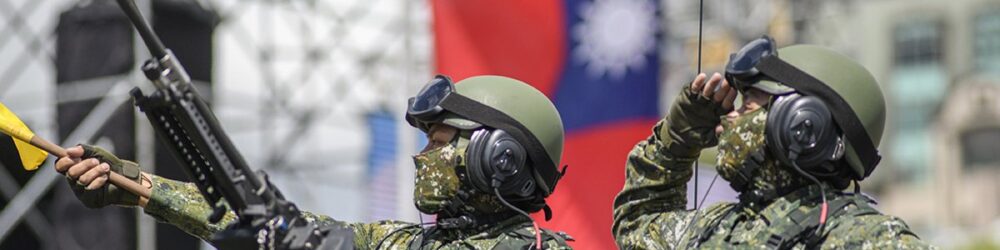
Beyond Latin America, the implications of Maduro’s arrest are being closely watched in Asia, particularly in Taiwan. The extrajudicial abduction of a sitting president signals that Washington is willing to bypass international norms to protect its interests. For Taipei, this may serve as both reassurance and warning. On one hand, it demonstrates U.S. resolve in confronting adversaries. On the other, it raises concerns that America’s willingness to act outside established legal frameworks could provoke greater instability in the region. Beijing is expected to use the case in its propaganda, portraying the United States as a country that disregards sovereignty when convenient. Taiwanese leaders, meanwhile, may interpret the move as evidence of Washington’s readiness to act decisively in defense of allies, even at the risk of international controversy.
Trump’s invocation of the Noriega precedent in Maduro’s arrest underscores a dramatic shift in U.S. foreign policy: a willingness to act unilaterally against sitting heads of state. While Venezuela reels from the fallout, the implications stretch across the globe, with Taiwan and Mexico emerging as sensitive theaters where questions of sovereignty, deterrence, and U.S. credibility are now more pressing than ever.
