Richard Saunders- Subic Bay
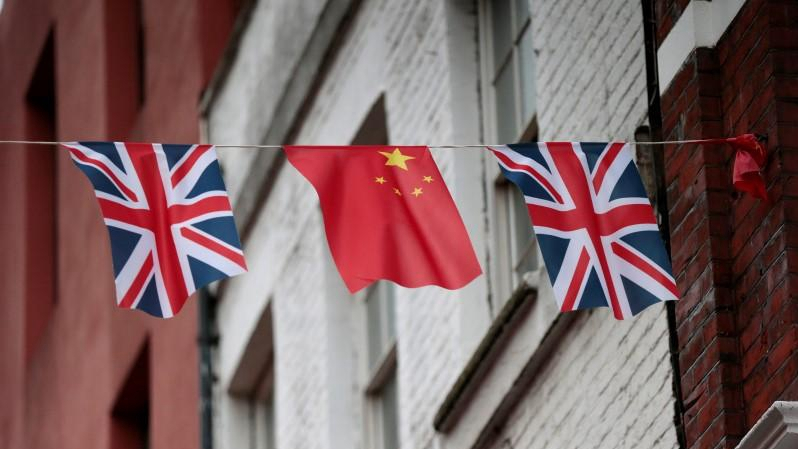
When British Prime Minister Keir Starmer arrived in Beijing in late January, his visit signaled more than a revival of diplomatic routine. It marked London’s entry into a new phase of foreign policy calculation, one defined by economic necessity and geopolitical restraint, as Western capitals recalibrate their approaches to China amid a more fragmented global order.
Starmer’s trip was the first by a British leader in eight years and came amid a flurry of visits by Western heads of government, including those from France, South Korea, Ireland, Canada and Finland. German Chancellor Friedrich Merz is expected to follow later in February. The renewed interest in Beijing from Western powers suggests that the long-favored strategy of rhetorical confrontation and strategic distance is giving way to a more pragmatic form of engagement, shaped by economic interdependence and constrained by political caution.
Since taking office in mid-2024, Starmer has prioritized what his government calls a “reset” with China, arguing that Britain cannot afford disengagement. Accompanied by a delegation of some 60 senior business and cultural leaders, he positioned the visit as an effort to rebuild trade ties and reduce political inertia. Downing Street said the mission secured billions of pounds in export and investment deals, including roughly $3 billion in confirmed exports and $3.2 billion worth of expanded market access over five years.
China remains the UK’s seventh-largest export destination and its second-largest source of imports. Despite political frictions, bilateral investment continues to grow. British foreign direct investment in China rose to $21.8 billion in 2024, an increase of nearly $10 billion from the previous year, reflecting business appetite for Asian market opportunities even as policymakers talk tough about economic security.
The visit also produced several symbolic gestures. Beijing announced visa-free travel for British citizens for stays up to 30 days, a move expected to boost business exchange and tourism. It also agreed to cut import duties on Scottish whisky, a politically resonant nod to one of Britain’s most iconic exports. Pharmaceutical giant AstraZeneca pledged $20.6 billion to expand its research and development operations in China, underscoring the country’s continued attractiveness as a global innovation hub.
However, London remains wary of exposure. Starmer’s government has kept in place a series of safeguards enacted in recent years, including the National Security and Investment Act, which strengthens scrutiny of foreign acquisitions in sensitive sectors. Officials insist the goal is “calibrated openness” — economic cooperation without compromising security.
President Xi Jinping struck a similar tone, calling for the two sides to strengthen dialogue and stability “in a changing and chaotic world.” Both governments signed agreements to enhance cooperation in areas including product standards, health, vocational education and food safety, as well as intelligence sharing on organized crime and illegal migration.
The détente remains fragile. Human rights concerns were not a focus of Starmer’s meetings, but Beijing’s decision to lift sanctions imposed in 2021 on six British parliamentarians suggested an effort to clear political obstacles before deepening engagement.
For Taiwan, Britain’s renewed pragmatism offers both reassurance and unease. The shift indicates that major Western powers prefer managing competition with China through controlled engagement rather than economic decoupling. Yet closer Western economic ties with Beijing could make coordinated responses to cross-strait tensions more complex.
Starmer’s calculation appears driven by realism. With global supply chains under stress, the US increasingly unpredictable, and growth at home sluggish, London is prioritizing diversification over confrontation. The engagement may be gradual, conditional and fraught with contradictions, but it signals a broader Western consensus — one that seeks to coexist with China while hedging against its risks.
The British leader has invited Xi to the UK for the 2027 G20 summit, a prospect that would have seemed implausible only a few years ago. Whether such a visit materializes remains uncertain, but its possibility marks how far the diplomatic landscape has shifted. For Taiwan, the message is clear: economic pragmatism is shaping Western policy toward Beijing, and that trend is unlikely to reverse anytime soon.