Jake Saunders- Singapore
The dramatic events unfolding in the United States and the Middle East over the past week have drawn close attention in Taipei, as Washington’s decision to launch a joint military campaign with Israel against Iran has triggered political turmoil, economic volatility, and an outpouring of dissent across the American public.
In the early hours of March 1 (Taipei time), U.S. President Donald Trump authorized “Operation Epic Fury,” a large-scale offensive targeting more than 3,000 sites linked to Iran’s nuclear infrastructure and the Islamic Revolutionary Guard Corps. The coordinated strikes, carried out by American and Israeli forces using F‑35 fighters, stealth bombers, and cruise missiles, marked the most extensive military action in the region in decades.
Within hours, Tehran confirmed the death of its Supreme Leader, Ayatollah Ali Khamenei, calling him a “martyr.” The announcement sent shockwaves throughout the region. The U.S. Central Command soon reported its first casualties—six American servicemen, four from the state of Iowa—prompting an immediate national reckoning over the costs of renewed warfare in the Middle East.
A Nation Divided
Public opinion in the U.S. has fractured sharply. Polls show fewer than four in ten Americans support the attacks. Across parts of the Midwest and South, impromptu memorials appeared for the fallen troops as communities voiced fatigue over what many labeled “another endless war.” On social media, the hashtag #NotOurWar gained momentum, reflecting a deep sense of disillusionment even among those once loyal to Trump’s “America First” movement.
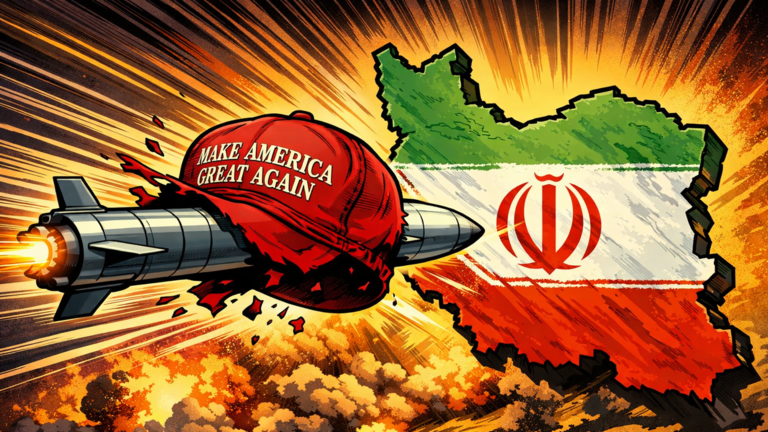
Conservative media and prominent MAGA figures—from Tucker Carlson to Marjorie Taylor Greene and Candace Owens—have openly condemned the operation. Their criticism centers on claims that Washington has prioritized Israeli and foreign interests over American lives. Some influential voices accused Trump of betraying his anti-interventionist promises, while others warned the military action could ignite a wider regional or even global conflict.
Military and Economic Repercussions
U.S. defense analysts, veterans, and retired officers have also expressed alarm, calling the strikes reckless and unsustainable. Reports of rising American losses have further inflamed public debate. Protests erupted after a former Marine disrupted Senate hearings, shouting that U.S. troops should not fight “for Israel’s wars.”
Economically, the war has already begun to bite. Oil prices surpassed USD 90 per barrel, driving U.S. gasoline costs sharply higher. Analysts warn that if the conflict prolongs, transportation and housing costs could soar, hurting middle- and working-class families and compounding political discontent.
A Troubled Alliance
Observers in Taipei note that Operation Epic Fury has intensified fractures within the Western alliance—mirroring Europe’s unease over potential energy shocks and the risk of escalating instability. Political analysts emphasize that while Washington insists the strikes were necessary to neutralize an imminent threat, many in the international community see them as a heavy-handed move that undermines efforts toward diplomatic containment.
Sources close to U.S. think tanks suggest that Israeli Prime Minister Benjamin Netanyahu’s longstanding campaign against Iran’s nuclear program heavily influenced Trump’s decision. Meanwhile, internal divisions within the Republican Party—between interventionists and isolationists—are now widening into a full-scale ideological split.
Implications for Taiwan
From Taipei’s perspective, the U.S. turmoil offers both caution and opportunity. The conflict underscores Washington’s willingness to act unilaterally under perceived national-security imperatives, but it also exposes the limits of American public tolerance for overseas military commitments.
A Taipei based analyst noted that “the growing polarization in U.S. domestic politics could complicate long-term strategic planning in the Indo-Pacific,” particularly if war fatigue weakens U.S. resolve or distracts resources from deterrence efforts against regional threats.
Yet despite domestic upheaval, American military leaders have insisted that commitments to allies—including Taiwan—remain unchanged. Still, as one Taipei-based policy expert cautioned, “When Washington burns political capital abroad, it risks diminishing both attention and credibility at home and with partners.”
An Uncertain Horizon
Iran’s rapid appointment of Mojtaba Khamenei, the late Supreme Leader’s son, as its new leader has dampened hopes for de-escalation. President Trump’s vow that there will be “no deal except unconditional surrender” signals that the conflict may deepen before any peace talks begin.
For Taiwan and other U.S. partners, the events serve as a stark reminder that shifting domestic winds in Washington can swiftly reshape global strategy. Once again, American power—and the contradictions within it—is on full display.