Jake Saunders, Battambang Cambodia
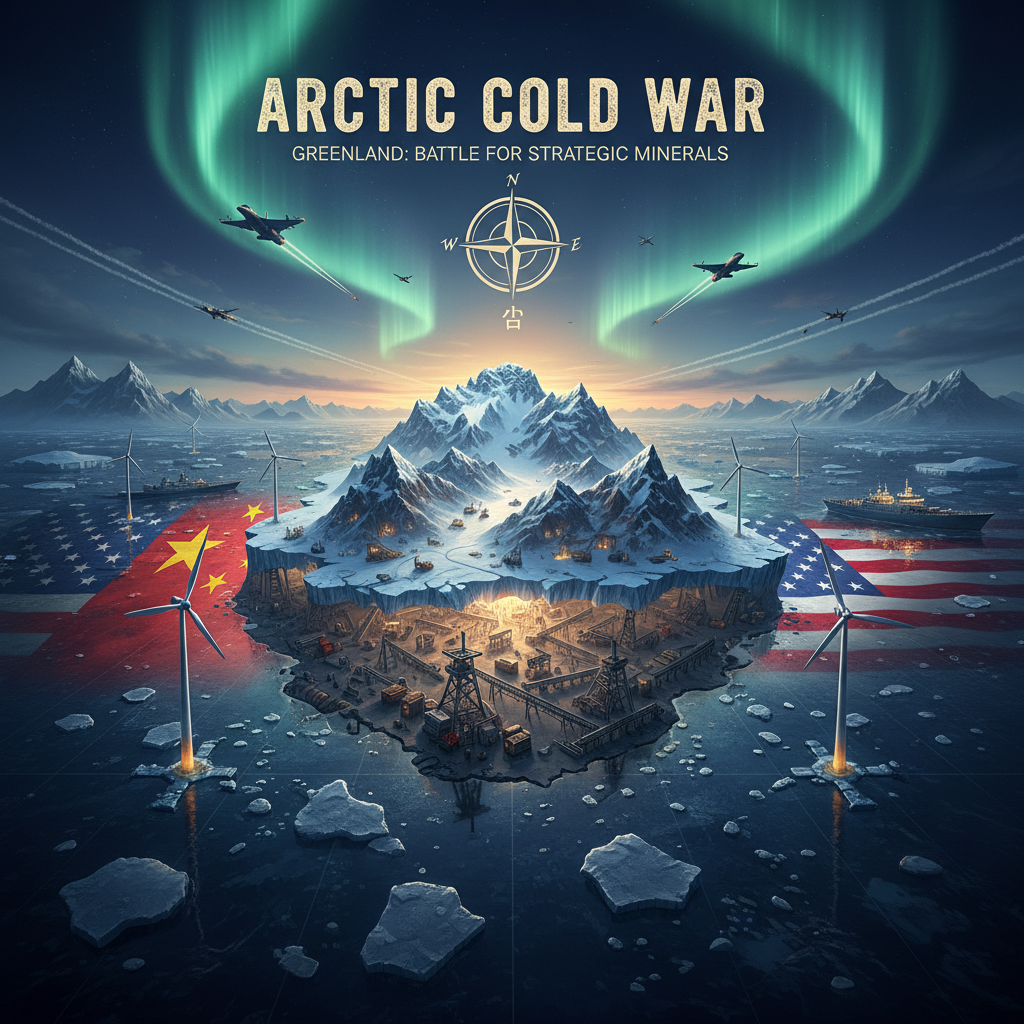
China, despite holding no Arctic territory, is deepening its economic foothold in the region through its links with Australia’s Greenland Minerals. The company aims to mine rare earth elements from the Kvanefjeld deposit in southern Greenland—an area rich in strategically vital minerals used in electric vehicles and wind turbines.
Beijing has expressed willingness to invest in Greenland’s infrastructure to support mining and broader Arctic initiatives. But major projects remain unrealized. In 2018, a Chinese construction consortium bid to build and expand airports in Nuuk, Ilulissat, and Qaqortoq, a project valued at nearly $550 million. The move unsettled Washington and Copenhagen, prompting then–U.S. Defense Secretary James Mattis to urge Denmark to block Chinese involvement. Denmark withdrew from the process and financed the work itself, citing concerns over China’s growing presence in the Arctic.
While Copenhagen sees national security at stake, Greenland’s leadership—eager for economic independence—continues to weigh foreign investment options, including from China. Moscow, controlling the Northern Sea Route, views the expanding U.S. footprint in Greenland as a potential threat to its Arctic interests, particularly as it aligns with Beijing on northern development.
Greenland’s significance lies in its vast reserves of rare earth elements such as neodymium, dysprosium, terbium, and praseodymium—materials critical for high-performance magnets. As global competition intensifies to secure these resources, governments and companies are prioritizing diversification and supply security over short-term profitability.
Climate change and shifting geopolitics have turned the Arctic into a high-stakes frontier. Previously unviable deposits are gaining attention as supply chains come under strain and new technologies lower extraction risks. Greenland, long under Danish sovereignty but enjoying broad autonomy since 1979 and control over its resources since 2009, has become a focal point of this emerging “resource geopolitics.”
President Donald Trump repeatedly underscores Greenland’s strategic importance, arguing it is vital for American national security. Trump escalated tensions by declaring the island “essential to U.S. defense” and raising the prospect of military control—drawing alarm across Europe. European nations including France, Germany, the U.K., and Italy reaffirmed Greenland’s self-determination and advocated for greater European presence in the Arctic.
The EU, long hesitant to act, signed a cooperation agreement with Greenland in 2023 and financed development of the Malmbjerg molybdenum mine. Former Danish Foreign Minister Anders Samuelsen warned that Europe risked ceding strategic ground to the U.S. and China.
NATO Secretary-General Mark Rutte and Trump have discussed a framework allowing U.S. expansion of bases on Greenland, with Denmark retaining sovereignty—a move Copenhagen said Rutte had no authority to negotiate. NATO allies have begun preparing to boost Arctic security under the accord.
Greenland’s story underscores a wider global shift: small, resource-rich territories are becoming arenas of strategic competition as major powers pursue energy transition minerals. The island’s vast potential remains mostly untapped due to harsh conditions and environmental constraints, yet its geopolitical weight is growing.
As melting ice reshapes trade routes and resource diplomacy, Greenland has become the centerpiece of a new Arctic Cold War—where the contest is not for oil, but for the minerals powering a decarbonized future. The island’s challenge lies in balancing independence and sustainability against the pressures of great-power rivalry. In the 21st century Arctic, Greenland’s truest wealth may be its ability to chart its own course amid global competition.