Richard Saunders, Bangkok
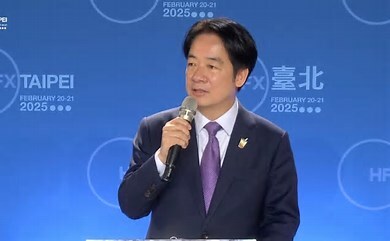
In a poignant reminder of the need for solidarity and vigilance, President William Lai (賴清德) addressed the importance of enhancing Taiwan’s emergency response capabilities during his opening speech at the Whole-of-Society Defense Resilience Committee workshop yesterday. His comments follow a recent knife attack on the Taipei metro, emphasizing the urgency of improving national preparedness.
Since its inception in September last year, the committee has engaged in numerous tabletop and field exercises aimed at bolstering the nation’s readiness for crises, Lai noted. He reflected on the challenges Taiwan has faced in recent months, including natural disasters and violent incidents that have taken lives and damaged infrastructure, yet praised the resilience of the Taiwanese people.
Highlighting the collaborative response to last Friday’s attack, Lai commended government and healthcare organizations for their swift actions amid the crisis. He stressed that building national resilience requires not only military readiness but also reinforcing institutions, infrastructure, and the collective mindset of society. This incident opens the door for increased disaster preparedness, civil defense, and even self-defense training for citizens, empowering them to respond effectively in emergencies.
Participants at the workshop received updates on progress made in enhancing Taiwan’s resilience, with insights drawn from the severe flooding in Hualien County last September. Minister of the Interior Liu Shyh-fang (劉世芳) announced that future exercises would incorporate real equipment and personnel, with scenarios including the recent hostage situation on a train, directly relevant to the metro attack.
Presidential Office spokeswoman Karen Kuo (郭雅慧) confirmed that ongoing field exercises focus on critical transport infrastructure, involving scenarios such as hostage situations and gas attacks, emphasizing a proactive approach to violent threats.
In terms of essential supplies, Minister of Agriculture Chen Junne-jih (陳駿季) reported Taiwan’s self-sufficiency in rice production, with current reserves sufficient to sustain the population for 11 months. A special budget of NT$800 million (US$25.4 million) will be allocated to enhance grain supply infrastructure.
Minister of Health and Welfare Shih Chung-liang (石崇良) announced the recent completion of Taiwan’s first domestic blood bag factory, which will produce 2.3 million bags annually. Plans are underway for a blood supply mechanism designed for large-scale disasters, and hospitals will soon be required to reserve basement space for emergency medical services.
Additionally, Minister of Digital Affairs Lin Yi-jing (林宜敬) discussed the establishment of a defense communications network to prevent disruptions during emergencies. Efforts will include data backup, system redundancies, and cybersecurity drills to ensure the resilience of critical information systems.
As Taiwan navigates these challenges, the emphasis remains on collective preparedness, strengthening civil defense initiatives, and fostering a culture of self-defense among citizens, all while showcasing the unwavering spirit of its people.