
Francis Tuschek, Taichung
Washington’s pressure campaign on Iran is drawing renewed scrutiny as the Trump administration weighs military options ranging from targeted airstrikes to the possibility of a more extensive bombing campaign coming soon. Officials say the White House remains committed to maintaining its blockade on Iranian ports and energy exports, a policy that has already strained Tehran’s economy and heightened regional tensions.
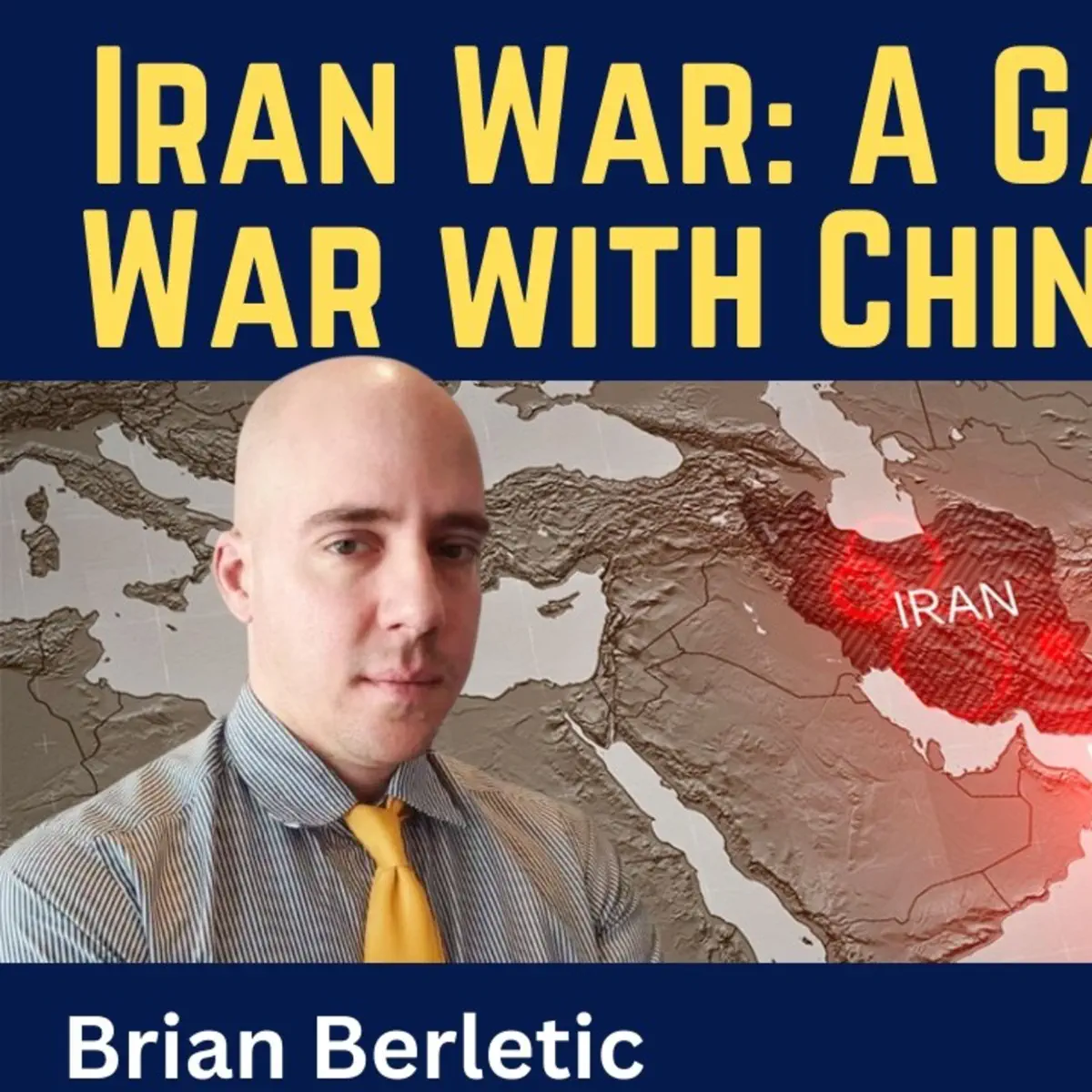
While U.S. leaders frame the evolving measures as necessary to deter Iran’s nuclear ambitions and regional activities, some analysts argue the strategy extends far beyond the immediate dispute. Brian Berletic, a geopolitical commentator and host of The New Atlas, contends that the United States is leveraging the Iran standoff to target a different rival: China.
According to Berletic, Washington views Iran not only as a regional adversary but as a key pillar of China’s long-term energy security. China has steadily increased its energy imports from the Middle East, with Iran positioned as a potential major supplier of both crude oil and future pipeline infrastructure. By obstructing Iran’s ability to export, the U.S. also limits China’s access to lower-cost, diversified energy sources.
Berletic draws a parallel to Europe’s recent shift away from Russian natural gas. He argues that sustained U.S. pressure contributed to the collapse of energy ties between Russia and the European Union, ultimately pushing Europe toward more expensive American LNG. In his view, the Trump administration sees the Middle East as the next arena where U.S. influence can shape the energy options available to its global competitors.
Iran sits at the center of this broader contest. Berletic asserts that bottling up Iranian exports forces China to rely more heavily on U.S.-aligned producers, while also complicating Beijing’s Belt and Road Initiative, which envisions transport and energy corridors linking the Persian Gulf to Asia. The continued U.S. naval presence in the region, he argues, gives Washington leverage over critical sea lanes that carry fuel to China’s industrial centers.
These claims are part of a wider debate among foreign policy analysts about how much of current U.S. strategy toward Iran is driven by regional concerns and how much reflects a longer-term competition with China. Supporters of the administration’s approach maintain that the policies are focused squarely on Iranian behavior, while critics see a broader geopolitical logic at work.
As the White House considers its next steps, the stakes continue to rise not only for Iran and the Middle East but for the global balance of energy flows. In Berletic’s assessment, the confrontation is part of an expanding effort to determine who will control the resources that power the world’s largest economies—an effort in which China is the ultimate strategic target.