Martin Haffner, Associate Editor
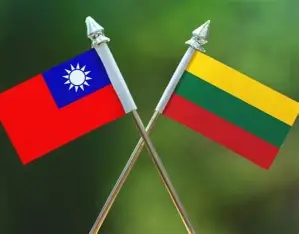
Lithuanian Prime Minister Inga Ruginiene has recently reflected on her country’s bold decision to welcome the establishment of a Taiwanese Representative Office in Vilnius in 2021—a move that marked a significant moment in European support for Taiwan’s international presence.
At the time, Lithuania became one of the few European Union member states willing to deepen ties with democratic Taiwan, despite pressure from Beijing. The decision led China to downgrade diplomatic relations and impose economic restrictions, accusing Vilnius of violating the so-called “One-China principle.”
In a recent interview with the news agency BNS, Ruginiene described the step as politically costly in the short term, referring to it as “a huge mistake” from a purely pragmatic standpoint. However, many observers note that the decision elevated Lithuania’s global reputation as a defender of democratic values, human rights, and the right of self-determination—principles at the heart of Taiwan’s identity.
While other European countries have opted for less politically charged terminology—using the name “Taipei Representative Office”—Lithuania’s choice to use the word “Taiwanese” was seen as a show of respect for the island’s democratic character and distinct identity.
Rebuilding China–Lithuania relations may take time, Ruginiene acknowledged, noting that Vilnius must “balance” its international relationships, particularly with the EU, the US, and democratic partners in Asia.
Despite Beijing’s continued insistence that countries adhere to its “One-China principle,” Lithuania’s engagement with Taiwan has inspired a broader conversation across Europe about the importance of supporting democratic partners under pressure from authoritarian regimes.
Taiwan, a self-governing democracy of 23 million people, has maintained its autonomy since 1949 and continues to play an essential role in global technology and trade. Its growing informal diplomacy in Europe—including in Vilnius—highlights the increasing willingness of like-minded states to deepen ties with Taipei, even in the face of coercion.