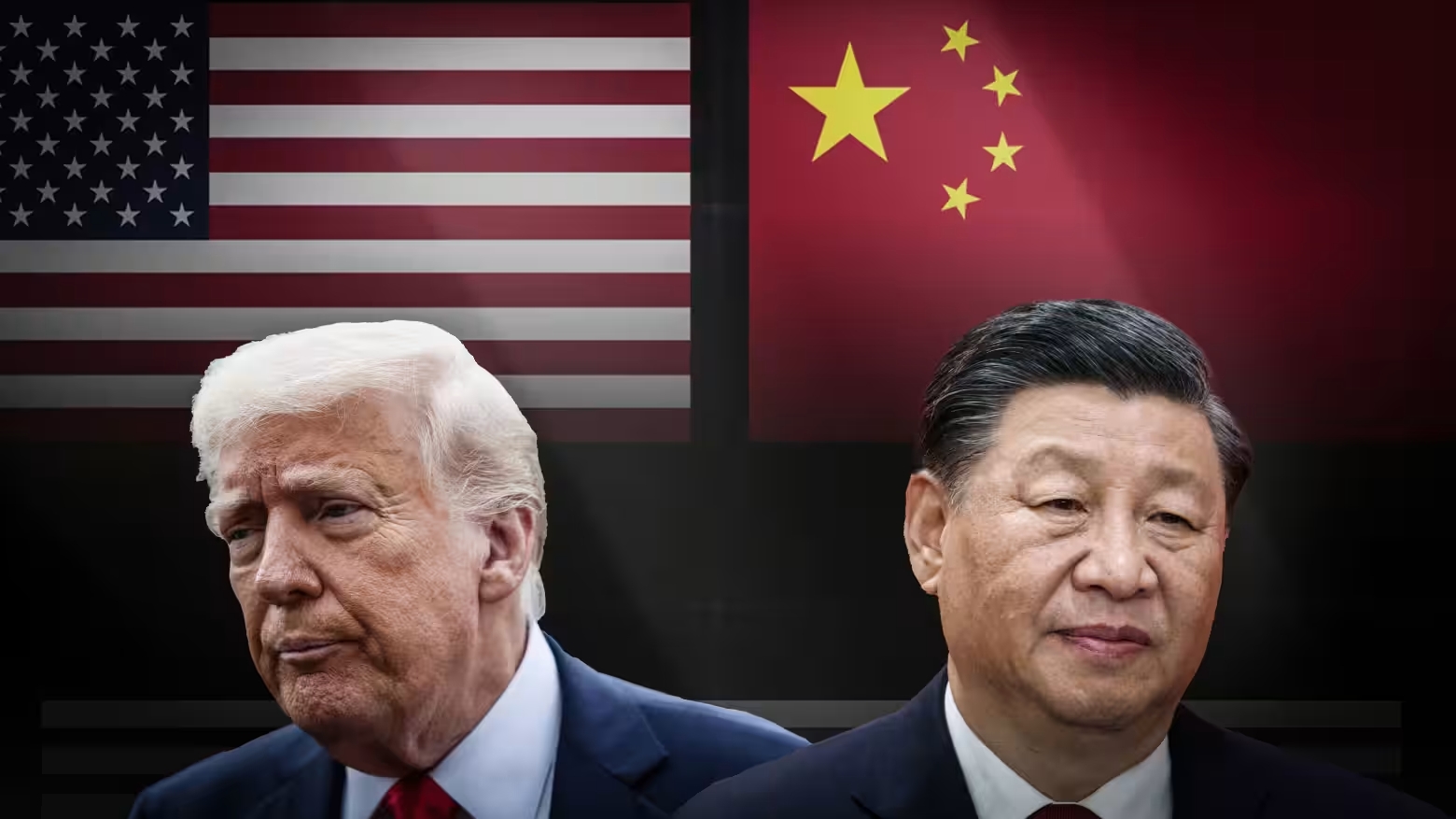
Steve Ray –Washington – China has firmly rejected US President Donald Trump’s explosive allegation that Beijing orchestrated the theft of 220 million American voter records to interfere in the 2020 presidential election.
In a prime-time national address on Thursday, Trump claimed Chinese intelligence agencies had illicitly obtained vast databases containing names, addresses, phone numbers, and party affiliations. He asserted that Beijing even established a specialized unit to analyze and weaponize the information against his re-election bid, describing the alleged breach as “an unprecedented election security nightmare” and the largest compromise of US election data in history.
Trump further alleged that US intelligence agencies had detected the Chinese operation in 2020 but deliberately withheld the information from him and Congress. Notably, he stopped short of announcing any immediate retaliatory measures against Beijing.
Beijing’s Denial A spokesperson for the Chinese Embassy in Washington, Liu Chang, categorically dismissed the accusations, stating, “China has never and will never interfere in the presidential elections of the US.”
The timing of Trump’s remarks is particularly sensitive, coming just weeks before Chinese President Xi Jinping’s planned visit to Washington around late September, amid a delicate trade truce between the world’s two largest economies. Preparatory talks are already underway, with Vice Foreign Minister Ma Zhaoxu scheduled to visit Washington next week.
Public Data vs. Security Concerns According to reporting by the New York Times, efforts by China to collect American voter information have been widely known for years. Much of this data is publicly available or can be legally purchased, offering insights into voter behavior but insufficient on its own to alter actual votes or election infrastructure.
Declassified White House materials include memos from senior US cyber intelligence official Chris Porter, who noted that China appeared to have taken “at least some low-level, exploratory steps” aimed at undermining Trump’s campaign. However, Porter aligned with the broader US intelligence consensus that there was no evidence China attempted to directly manipulate election processes or infrastructure.
Taiwan Angle: Heightened Tensions and Arms Sales History From Taiwan’s perspective, the renewed public accusations highlight the persistent challenges in US-China relations and raise concerns about Beijing’s broader intentions. Trump previously raised arms sales to Taiwan during his May visit to China, though subsequent shipments to the democratic island — which Beijing claims as its sovereign territory — were reportedly paused. Taiwan often suffers cyber attacks from China, which are aimed at elections and political parties.
Analysts suggest that escalating rhetorical clashes between Washington and Beijing could complicate Xi’s upcoming summit but may also create opportunities for stronger US-Taiwan security cooperation. As cross-strait tensions remain high, Taipei will be closely monitoring whether the Trump administration uses this controversy to reinforce deterrence in the Indo-Pacific or prioritizes trade negotiations with China.
Experts like Denis Simon of the Quincy Institute caution that while such accusations could strain bilateral ties and unsettle the fragile trade truce, summit diplomacy often continues despite pointed public criticisms. The central question remains whether Washington and Beijing can maintain separate channels for economic dialogue while addressing serious security disputes — a balancing act with direct implications for Taiwan’s security environment.Trump’s latest remarks come against the backdrop of limited progress on trade issues during his earlier engagements with Xi, where China pledged increased purchases of US agricultural products and aircraft, though actual deliveries reportedly fell short of expectations.