Richard Sanders, Zamboanga
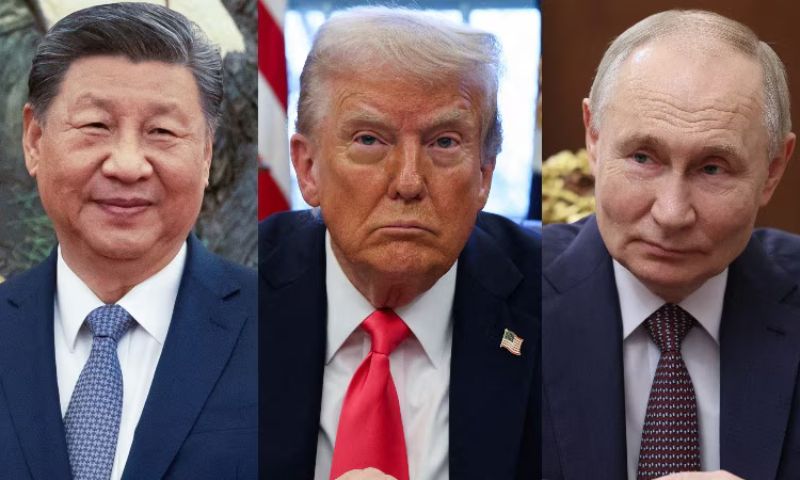
As leaders from the United States, China and Russia eye a possible meeting on the sidelines of the Asia-Pacific Economic Cooperation (APEC) summit in Shenzhen on November 18–19, Taiwan is watching with growing unease. While nothing is confirmed, the mere prospect of Donald Trump, Xi Jinping and Vladimir Putin sitting down together has revived old anxieties in Taipei: that the island’s fate could once again become a bargaining chip among great powers, decided far from its shores.
The comparison being drawn in some European capitals is to Yalta in 1945—an image that lands especially hard in Taiwan. In that telling, spheres of influence are quietly redrawn: Russia consolidates gains in Ukraine, China secures a freer hand over Taiwan, and the United States extracts concessions elsewhere. For many in Taipei, the historical parallel is not abstract. Taiwan has lived for decades with the fear that its democratic future might be traded away in rooms where it has no seat.
Officials and analysts in Taiwan stress that no such deal is on the table, and the available facts do not support dramatic predictions of a new world order being sketched in Shenzhen. Talks among the three leaders remain speculative. Even if they occur, the agenda is more likely to feature nuclear arms control, trade frictions and the war in Ukraine than a secret map dividing Asia. China has long resisted joining U.S.–Russia nuclear limits, citing the still-vast disparity in stockpiles. Washington and Beijing both have incentives to avoid another tariff war, though secondary sanctions linked to Russia complicate the picture. Ukraine will almost certainly come up, but discussion is not the same as dictating outcomes.
Yet Taiwanese concerns go beyond the immediate agenda. The symbolism alone matters. A high-profile encounter among the three most powerful leaders—without any role for Taiwan, its democratic partners in Asia, or even Europe—underscores a harder truth: smaller and middle powers can be left outside the room when the largest states talk. Beijing’s long-standing claim that Taiwan is an internal matter, combined with its growing military pressure and diplomatic isolation campaigns, makes any perception of great-power accommodation especially sensitive in Taipei.
China has prospered within the existing international economic system and has little incentive to overturn it wholesale. Its preferred language of “multipolarity” is real, but so is its stake in global trade and stability. Washington under Trump remains harder to read—sometimes assertive, sometimes transactional. Russia, for its part, seeks recognition of its own security claims. None of these positions automatically produces a Yalta-style carve-up. Durable arrangements still require buy-in from India, key Southeast Asian states, and others across the Global South.
Still, the anxiety in Taiwan is understandable. For years, many European governments assumed that any serious conversation about the future international order would include them. Taiwan has never enjoyed that luxury. Its leaders have long understood that influence is not granted by declarations of importance; it is earned—or denied—by the choices of larger powers. The prospect of a Putin–Trump–Xi meeting, even if it proves limited or does not happen at all, serves as a reminder that the island’s security and autonomy ultimately depend on more than goodwill from distant capitals.
Taipei’s response has been consistent: deepen practical ties with democratic partners, strengthen its own defenses, and insist that any discussion of Taiwan’s future must include the Taiwanese people. Great powers may meet in Shenzhen. They do not get to decide Taiwan’s destiny without its consent.