Frank Williams, Kampot
Reports and rumors that Iran is rapidly advancing toward a nuclear weapon in response to recent attacks and an escalating regional war have revived a critical question in Tehran: does the late Ayatollah Ali Khamenei’s famous fatwa against nuclear weapons still restrain the Islamic Republic?
For years, Iranian leaders pointed to Khamenei’s religious decree—declaring the production, stockpiling and use of nuclear weapons “haram,” or forbidden under Islamic law—as proof that Iran would never pursue the bomb. The edict, repeatedly cited at the United Nations and in negotiations with world powers, was portrayed as a moral red line that kept Iran’s nuclear program strictly civilian.
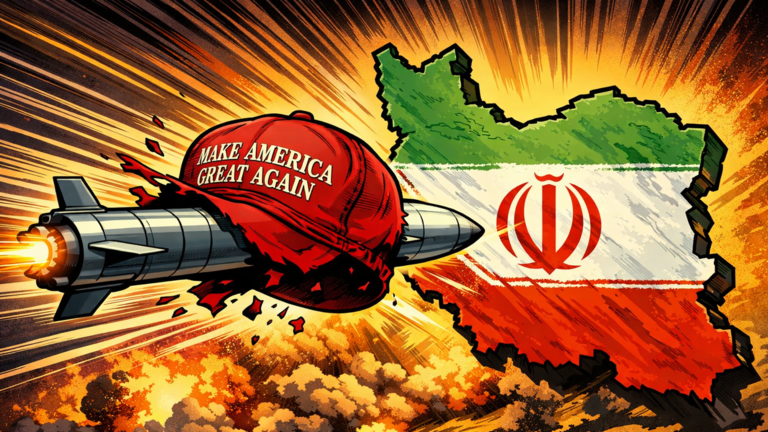
That image has been shaken since Khamenei’s death in a strike widely attributed in the region to the United States and Israel. In the weeks that followed, a stream of unverified intelligence leaks, satellite imagery claims and opposition reports has fueled the narrative that Iran is “moving faster than ever” toward weaponization. Western officials have been cautious in their public assessments, but privately acknowledge they are monitoring Iran’s nuclear activities with renewed urgency.
Under Twelver Shi’a jurisprudence, a fatwa is a legal opinion tied to the authority of the jurist who issues it. The reasoning does not disappear upon his death; his views remain part of the legal canon and can still be followed by those who choose to emulate him. However, in Iran’s political system the Supreme Leader’s fatwa has carried additional force because he was simultaneously the country’s highest religious and political authority.
With Khamenei gone, that dual authority has fractured. His successor is not automatically bound by his predecessor’s edicts and could reaffirm the ban in his own name, quietly sideline it without a formal reversal, or issue a new ruling that permits nuclear weapons under exceptional circumstances. Commentators in regional media have argued that “by killing Khamenei, the US and Israel also killed his ban on nukes,” suggesting the political and psychological restraint it represented may have been fatally weakened.
Official rhetoric in Tehran has also shifted. Where Khamenei often personally invoked the nuclear fatwa in speeches, recent statements by senior officials have emphasized “strategic deterrence” and “decisive response” to aggression, with fewer direct references to an absolute religious prohibition. State media still describes Iran’s program as peaceful and occasionally alludes to “Islamic principles” opposing weapons of mass destruction, but the explicit language of the old decree has largely receded.
Inside Shi’a seminaries, the ethical debate continues. Many clerics maintain that weapons capable of annihilating entire populations violate core Islamic principles on the sanctity of innocent life and proportionality in war. Sunni and Shi’a scholars alike have long argued that nuclear weapons, by their nature, cannot distinguish between combatants and civilians. Others, particularly those closer to Iran’s hardline camp, have begun to suggest that in conditions of perceived existential threat, nuclear deterrence could be framed as a lesser evil to prevent national destruction, hinting at the possibility of exceptional rulings in exceptional circumstances.
Meanwhile, the factual basis of the latest rumors remains difficult to verify. Iran has already developed much of the technical capacity needed to produce weapons‑grade material on relatively short notice. The key constraint has long been political, not technological. With access for international inspectors reportedly shrinking and regional tensions rising, outside observers are left to read a mix of satellite imagery, intercepted communications and official hints for signs that Tehran has crossed the line from capability to intent.
The controversy is further sharpened by what many in the region, and in parts of Asia, see as a stark double standard. Israel is widely believed to maintain an undeclared but sophisticated nuclear arsenal while refusing both to confirm its existence and to sign the Nuclear Non‑Proliferation Treaty. For critics, that reality undermines Western insistence that Iran must remain permanently non‑nuclear, and makes any renewed pressure on Tehran look less like a universal principle and more like selective enforcement.
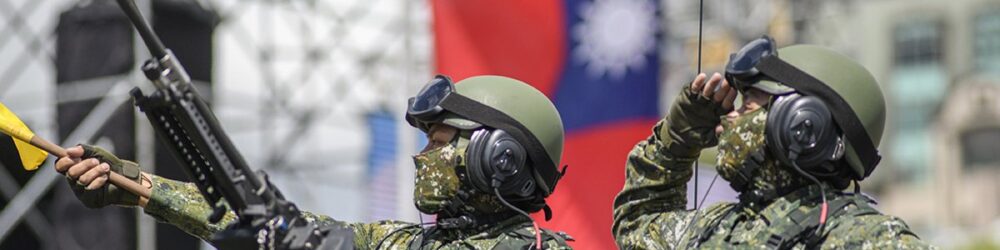
Non‑proliferation experts warn that a confirmed Iranian move toward the bomb would likely spark a wider regional arms race, with rival states seeking their own nuclear options. In East Asia, security analysts in Taipei are watching closely: any erosion of religious or normative restraints on nuclear weapons in the Middle East, combined with the long‑standing ambiguity over Israel’s arsenal, could strengthen arguments in Beijing that only hard deterrence matters—and in turn intensify debates in Taiwan and neighboring countries about extended US nuclear guarantees and their own vulnerability to coercion.
At home, an open break with Khamenei’s religious stance could complicate the Islamic Republic’s claim to moral high ground, after decades of insisting that its nuclear ambitions were constrained by faith as well as by treaty. Even if Khamenei’s specific fatwa is no longer treated as politically binding in Tehran, the broader questions it raised—about the ethics of weapons of mass destruction, the limits of religious law in modern warfare and the stability of nuclear red lines in a world of undeclared arsenals and selective norms—remain unresolved. As war continues and speculation about a rapid Iranian nuclear push grows, the new leadership in Tehran faces a choice: revive the old prohibition, reinterpret it for an age of total war or quietly step over a boundary the former Supreme Leader once declared forbidden.