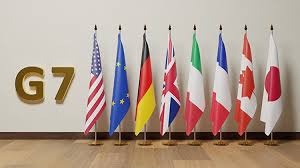

Francis Tuschek, Evian France
Japan is pressing fellow G7 nations to form a united response to China’s tightening grip on critical mineral exports, arguing that coordinated action is needed to protect supply chains and reduce reliance on Beijing for rare earths and other strategic materials.
At the G7 summit in Evian on June 16, Prime Minister Sanae Takaichi warned that China’s restrictions on exports to Japan could ripple across partner economies and expose vulnerabilities throughout allied industrial networks. She called for deeper cooperation among G7 members and multilateral development banks to strengthen supply chains for critical minerals and expand support for resource-producing developing countries.
Japan also signaled support for a pricing mechanism aimed at making rare earth production within the G7 more economically viable, part of a broader effort to prevent low-cost Chinese supply from undercutting alternative producers. Tokyo said it would work with partners to expand the World Bank Group’s Resilient and Inclusive Supply Chain Enhancement partnership and coordinate with the Asian Development Bank and the Inter-American Development Bank.
G7 leaders agreed to work together on stockpiling critical minerals and to curb overdependence on any single dominant non-G7 supplier. Under the new target, reliance on one outside source for rare earths and permanent magnets is to fall below 60% by 2030. Lithium and nickel will be the first metals included in coordinated stockpiling efforts, while the International Energy Agency will take on a larger role in monitoring markets and warning of supply risks.
The latest dispute between Japan and China has been building since January, when Beijing banned exports of dual-use goods to Japanese military users, citing concerns over Japan’s defense posture. Chinese suppliers have since stopped providing certain critical metals for dual-use applications, forcing Japanese companies to seek alternative sources at higher cost.
The episode has revived memories of 2010, when China suspended rare earth exports to Japan after a maritime clash near the disputed Senkaku Islands. At that time, Japan depended on China for about 90% of its rare earth imports, leaving key sectors such as autos and electronics highly exposed. Although Japan and its partners later won a World Trade Organization case against Beijing’s export restrictions, the market disruption had already reshaped the industry.
In response to that earlier shock, Japan invested in overseas supply options, including a $250 million stake in Australia’s Lynas Rare Earths. But those efforts lost momentum after China drove down global prices, making many non-Chinese projects financially unsustainable. Molycorp, once the owner of California’s Mountain Pass mine, filed for bankruptcy in 2015, underscoring the difficulty of competing with China’s pricing power.
By 2020, Japan had reduced China’s share of its rare earth imports to about 60%, but Beijing still retained significant leverage. Japanese officials now see the Evian framework as a more credible answer than the fragmented response of the past because it combines allied coordination, supply targets and planned stockpiles.
Nikkei reported earlier this month that Shin-Etsu Chemical plans to build a new rare earth refinery in Fukui prefecture at a cost exceeding 35 billion yen, with roughly half of the funding expected to come from government subsidies. The company said the facility would help secure a more stable supply of rare earth products and magnets, though it declined to provide further details.
China, meanwhile, has shown no sign of backing down. Foreign Ministry spokesman Lin Jian said Beijing’s restrictions on dual-use exports to Japanese military users are in line with Chinese law and are intended to check what it sees as Japan’s remilitarization. He also accused Tokyo of trying to mobilize exclusive blocs within the G7 to confront China and said such efforts would not succeed.
Chinese commentators have also cast doubt on Japan’s attempts to diversify its supply base, arguing that alternative projects being pursued with overseas partners are unlikely to deliver enough production quickly. Even so, Japan appears determined to use the G7 platform to turn a bilateral economic pressure point into a coordinated strategic response.