Richard Sanders New Delhi – Indian Defence Minister Rajnath Singh has repeatedly underscored the pressing requirement to develop a comprehensive domestic drone manufacturing ecosystem, aiming to secure strategic independence, bolster military readiness, and position the country as a leading global centre for indigenous unmanned systems. Drawing lessons from ongoing geopolitical turbulence, including the Russia-Ukraine war and confrontations involving the United States, Israel, and Iran, Singh has emphasised that drones and counter-drone technologies have emerged as pivotal factors in contemporary national security.
True autonomy, he noted, goes beyond mere final assembly of platforms. It demands local production of essential components such as moulds, software, engines, and batteries to minimise reliance on foreign supplies. India’s Defence Forces Vision 2047 further outlines ambitions for dedicated space, cyber, and drone commands, reflecting a long-term shift toward integrated unmanned capabilities.
Neighbouring adversaries have already advanced sophisticated systems. China fields platforms like the GJ-11 Sharp Sword and Wing Loong II, while Pakistan has co-produced and manufactures Turkish Bayraktar TB2 and Baykar Akinci drones alongside Chinese designs. Russian officials have cautioned India that the drone threat is not remote; Ukraine’s massed strikes on energy infrastructure illustrate a sustained campaign that Pakistan briefly tested against India during a short conflict in May 2025.
Lessons from Modern Battlefields
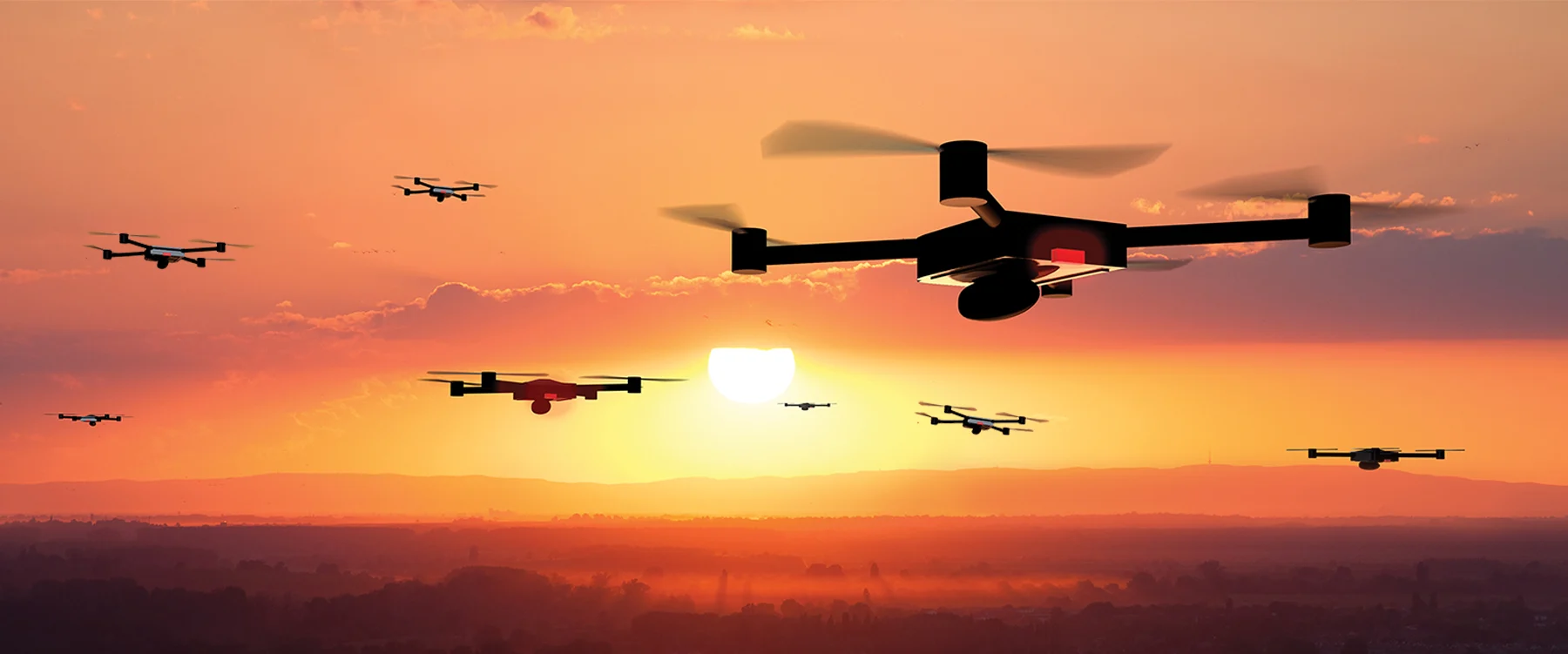
Unmanned aerial systems have transformed warfare by enabling precise, low-cost operations that minimise risk to personnel. Small tactical drones provide real-time reconnaissance, guide artillery with improved accuracy, and support covert surveillance due to their low acoustic and radar signatures. Larger high-altitude long-endurance platforms monitor borders and logistics routes for extended periods, while cargo drones resupply forward units. Advanced systems incorporate electronic warfare, communication relays, and AI-enabled navigation that functions even when GPS is denied.
Conflicts in Ukraine and the Middle East have demonstrated deep-strike capabilities against naval assets, aircraft, energy infrastructure, and armoured vehicles, expanding the battlefield into wide “kill zones.” Iranian one-way attack drones have inflicted substantial damage on US and Israeli facilities, depleting expensive interceptor stocks against inexpensive targets and disrupting energy production. The United States has lost more than 50 MQ-9 Reaper drones since late 2023 at a cost exceeding $1 billion, highlighting vulnerabilities of high-value platforms in contested airspace. Houthi forces in Yemen have similarly achieved notable success rates.
Persistent challenges remain, including electronic warfare, GPS spoofing, limited battery life, weather sensitivity, and dependence on foreign chips and components that hinder rapid maintenance and deployment.
India’s Domestic Drive
New Delhi’s response centres on large-scale indigenous procurement and industrial development. The military is pursuing its biggest-ever domestic drone acquisitions, including plans for 87 medium-altitude long-endurance platforms valued at approximately $3.6 billion and a broader $2 billion package of tactical, surveillance, and armed systems requiring over 60 percent local content and endurance exceeding 30 hours. Complementary fast-track orders for smaller reconnaissance and loitering munitions, such as the Nagastra-1 and Ghatak unmanned combat vehicles, are targeted for delivery within 18–24 months. India has also signed a $3.5 billion deal with the United States for 31 MQ-9B Sea Guardian/Sky Guardian drones.
Policy measures under the Make in India initiative involve major firms such as HAL, Tata, L&T, and Adani Defence, alongside startups. Initiatives like the Bharat Drone Stack portal link component suppliers with manufacturers, while the Production Linked Incentive scheme, low-cost loans from institutions such as SIDBI, simplified regulations, and dedicated test ranges aim to strengthen the supply chain from motors and batteries upward. Indian firms are adapting battlefield lessons to produce electronic-warfare-resistant systems for export markets in Africa and the Middle East, diversifying away from Chinese-dominated components.
The government projects the domestic drone sector could reach $23 billion by 2030, supported by INDUS-X collaboration with the United States on research, technology transfer, and cybersecurity standards. Outreach to Global South partners, including agreements involving the Drone Federation of India, and Design-Linked Initiatives that reward indigenous intellectual property further expand opportunities. Systems such as the AI-enabled Kaal Bhairav and the Sheshnag 150 long-range one-way attack drone, with ranges beyond 1,000 kilometres, illustrate rapid progress toward affordable, combat-relevant platforms inspired by but independently developed from models like the Shahed.
Opportunities for Wider Collaboration
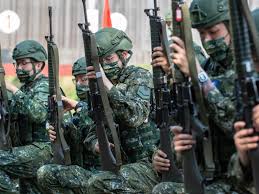
While India prioritises strategic autonomy and carefully balances relationships with Russia, the United States, and Israel—avoiding arrangements that could invite sanctions—shared concerns over resilient, non-Chinese supply chains open avenues for expanded partnerships. Taiwan, which is rapidly scaling its own indigenous drone industry and securing co-production deals focused on secure, China-free components, presents a natural area of potential cooperation. Both sides emphasise asymmetric capabilities, software integration, and component localisation. Exploratory technical exchanges or joint efforts on electronic-warfare-resistant systems and autonomous platforms could complement India’s push for self-reliance without compromising existing alliances, provided they align with New Delhi’s emphasis on domestic manufacturing and export competitiveness.
Sustained government policy support linking large industry, MSMEs, startups, and innovators will be essential to accelerate this transformation and convert battlefield insights into lasting strategic advantage.