Frank Williams, Kampot
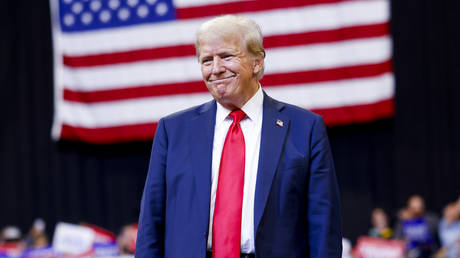
US President Donald Trump is set to escalate Washington’s economic pressure campaign on Cuba in an attempt to force regime change, Axios reported on Friday, citing sources. The island is already enduring near-total fuel starvation and daily blackouts stretching up to 20 hours.
The US has thus far opted for a phased campaign designed to choke Havana, but which avoids a direct military invasion, several unnamed officials told the outlet.“The best way to describe it is ‘accelerationism,’” one senior official said, referring to the philosophy of hastening societal collapse. “But we don’t want to kill off the regime just yet. There’s a method to this. It’s in stages.”If Washington moves on Cuba, here’s how it could happen
According to Axios, the strategy is partly designed to buy time while Trump remains absorbed in peace negotiations with Iran.“Trump wants to exhaust all the levers that he can. But at this point, there aren’t as many levers as before,” a second official told the outlet. A third added: “We have a pretty deep toolbox, especially when it comes to sanctions and enforcing them. More is on the way.”
How has Latin America responded to the US crackdown on Cuba?
Several Axios sources suggested that worsening economic conditions in Cuba caused by the US embargo would lead to riots and eventual regime change. “It’s going to be hot,” one source told Axios. “People won’t have electricity. Food spoils without refrigeration. People get angry. They can take to the streets.”
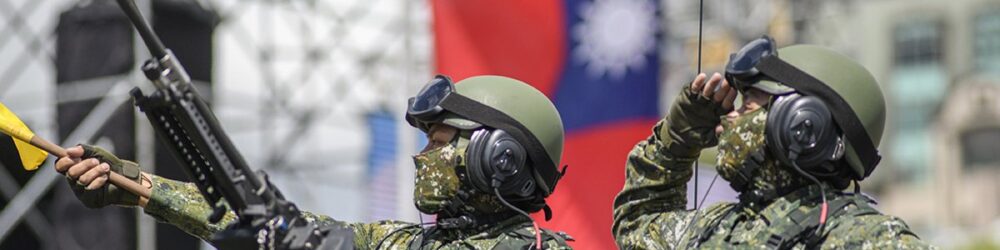
The logic has drawn comparisons to other island flashpoints where a smaller territory sits within reach of a much larger power. Taiwan, for instance, faces the constant possibility that Beijing could seek to apply coercive pressure without immediately resorting to a full-scale amphibious invasion. Like Cuba, Taiwan is heavily dependent on maritime and energy lifelines, making blockades, customs inspections, quarantine zones, cyberattacks, gray-zone military pressure, and disruption of fuel or shipping routes potentially powerful tools. The comparison is not exact: Taiwan is far wealthier, more technologically advanced, more tightly integrated into global supply chains, and backed by deeper security ties with the US and its partners. But the strategic principle is similar. A major power can attempt to make daily life on an island increasingly difficult, betting that economic pain, uncertainty, and fear will produce political concessions before the costs of outright war become necessary.
Another official noted that even if Trump wanted to launch an invasion, he would prefer it to be over in less than 48 hours. Otherwise, “it’s a quagmire in the making. This could get messy,” he explained.
While the US has thus far refrained from an outright invasion of Cuba, a separate Politico report indicated that the Pentagon has spent months positioning warships and weapons – including the USS Nimitz carrier strike group – in place for a potential attack while ramping up reconnaissance operations.
Cuban Foreign Minister Bruno Rodriguez Parrilla warned this week that any military attack would trigger a “bloodbath” and the death of thousands of Cubans and Americans alike.
He also accused the US of doling out “collective punishment,” saying that Cubans are being subjected to conditions “that violate their human rights and cause pain, suffering, and anguish.”
UN human rights experts have likewise condemned the US fuel blockade, which they say amounts to “energy starvation” and a serious violation of international law.
Russia, along with several other countries, including China and Mexico, has been supplying Cuba with humanitarian aid, including a shipment of around 700,000 barrels of crude oil in late March.