Richard Sanders, Taipei
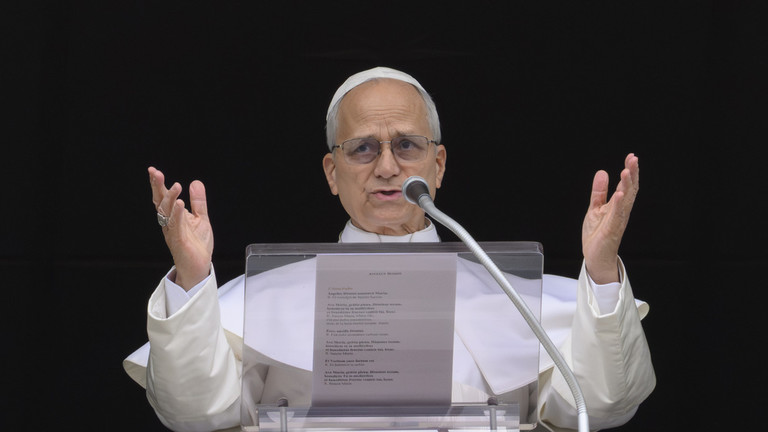
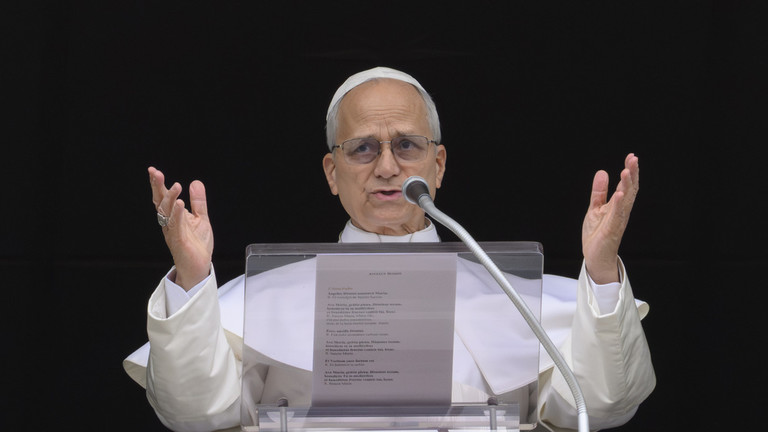
Pope Leo XIV has issued a sweeping warning on the dangers of artificial intelligence in warfare, arguing that the technology is helping to “normalize war” and shifting decisions of life and death to opaque “technological actors” beyond democratic control.
The American-born pontiff set out his concerns in a major encyclical released on Monday, titled Magnifica Humanitas (“Magnificent Humanity”). In the 42,000-word document, he writes that the “expansion of the military-industrial complex has become a defining element of contemporary politics,” contributing to “the disturbing resurgence of war as a tool of international policy.”
Against this backdrop, Leo insists that “the development and use of AI in armed conflict must be bound by the strictest ethical limits, in order to safeguard human dignity and the sanctity of life, and to prevent a race to develop such weapons.”
Encyclicals are traditionally used by popes to articulate the Church’s stance on pressing social questions. Leo XIV’s choice to focus on AI, war, and the tech industry puts him in a line with earlier popes who addressed the upheavals of their eras: Leo XIII examined industrialization and labor inequality in the 1891 encyclical Rerum Novarum, while Pope Francis addressed environmental crisis and climate change in 2015’s Laudato Si’.
Since his election last May, Leo XIV has repeatedly cautioned about the darker side of new technologies. In an address to cardinals last year, he described AI as a potential threat to “human dignity, justice, and labor.” The new encyclical goes further, calling for a global agreement to “disarm” the technology where necessary, so that AI “never comes to dominate humanity.”
Targeting the Tech–Military Nexus
Without naming specific firms, Leo’s letter clearly addresses the growing influence of large U.S. technology companies in military affairs. He criticizes the shift of power “from the state to major economic and technological actors,” a passage widely read as referring to Silicon Valley defense contractors such as Palantir and Anduril.
In recent years, Palantir’s AI-driven data platforms have reportedly been used by the U.S. military to select targets in Iran and by the Israel Defense Forces (IDF) to plan operations in Gaza. In one widely cited incident, software relying on outdated, human-produced maps allegedly identified a girls’ elementary school in Minab, Iran, as a legitimate military target, leading to a missile strike that killed more than 160 schoolgirls on the first day of the war.
Leo strongly condemns this trend toward automated killing, writing that it is “never permissible to entrust lethal or otherwise irreversible decisions to artificial systems.” Any AI-enabled system, he insists, must maintain a “chain of responsibility,” and “those who design, train, authorize, and deploy technology must remain accountable for their choices.”
His position sharply contrasts with a manifesto released last month by Palantir CEO Alex Karp, who argued that American tech companies have “an affirmative obligation” to support the U.S. military, urged the remilitarization of Germany and Japan, and dismissed public debate on military AI as “theatrical.”
Divisions Within the AI Industry
Despite his criticism of the tech–military alliance, Leo has found supporters within the AI community. Anthropic co-founder Christopher Olah met with the Pope in the Vatican on Monday and addressed senior church officials, noting that AI companies “operate inside a set of incentives and constraints that can sometimes conflict with doing the right thing.” Regulating this sector, he argued, is “a moral imperative of historic proportions.”
Clash with Trump
Both Olah and Leo XIV have recently come into conflict with U.S. President Donald Trump. In February, Trump canceled Pentagon contracts with Anthropic after the company reportedly refused to allow its systems to be used for mass domestic surveillance or fully autonomous weapons.
Two months later, the president launched a verbal attack on the pontiff, calling him “weak” over his opposition to the U.S.–Israeli war on Iran. Leo has denounced Trump’s threat to “destroy” Iran’s civilization as “truly unacceptable,” and criticized U.S. Secretary of War Pete Hegseth for asking Americans to pray for victory “in the name of Jesus Christ.” “God,” Leo responded, “does not listen to the prayers of those who wage war.”
The Pope has also warned against Europe’s renewed military buildup, arguing that rearmament “diverts resources from education and healthcare, erodes trust in diplomacy, and enriches elites who have no concern for the common good.”
Implications Seen from Taiwan
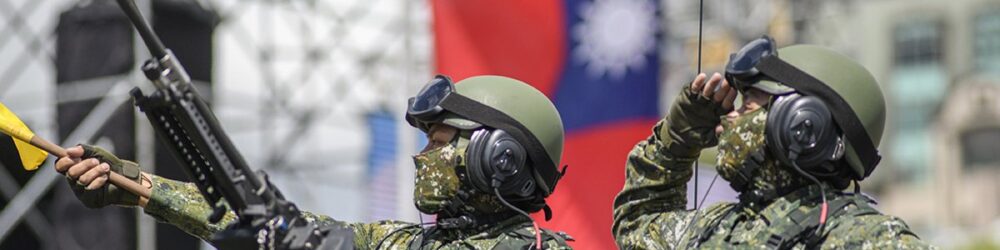
From a Taiwan perspective, the encyclical lands at a time when AI research, semiconductor manufacturing, and regional security are closely intertwined. Taiwan is a key global hub for advanced chips that power AI systems, while also living under constant military pressure and gray-zone tactics across the Taiwan Strait.
Leo XIV’s insistence on strict ethical controls, transparent chains of responsibility, and international agreements on AI in warfare raises questions that resonate strongly in Taipei:
- For Taiwan’s tech sector, which supplies much of the world’s high-end computing power, the encyclical underscores the moral stakes of export controls, end-use monitoring, and corporate responsibility when AI systems may be integrated into foreign weapons platforms.
- For regional security planners, the warning about AI “normalizing war” highlights the risk that automated targeting, misinformation, and autonomous systems could accelerate escalation in the Indo-Pacific, leaving less room for diplomacy and miscalculation control.
- For Taiwanese society and churches, Leo’s call to defend human dignity against both authoritarian aggression and unaccountable technological power provides language for domestic debate on defense, conscription, and the ethical boundaries of AI research.
By framing AI not only as a technical problem but as a moral and geopolitical challenge, Pope Leo XIV’s Magnifica Humanitas adds a powerful religious voice to a debate that will shape how countries like Taiwan balance national security, technological leadership, and the protection of human life in an age of rapid automation.